
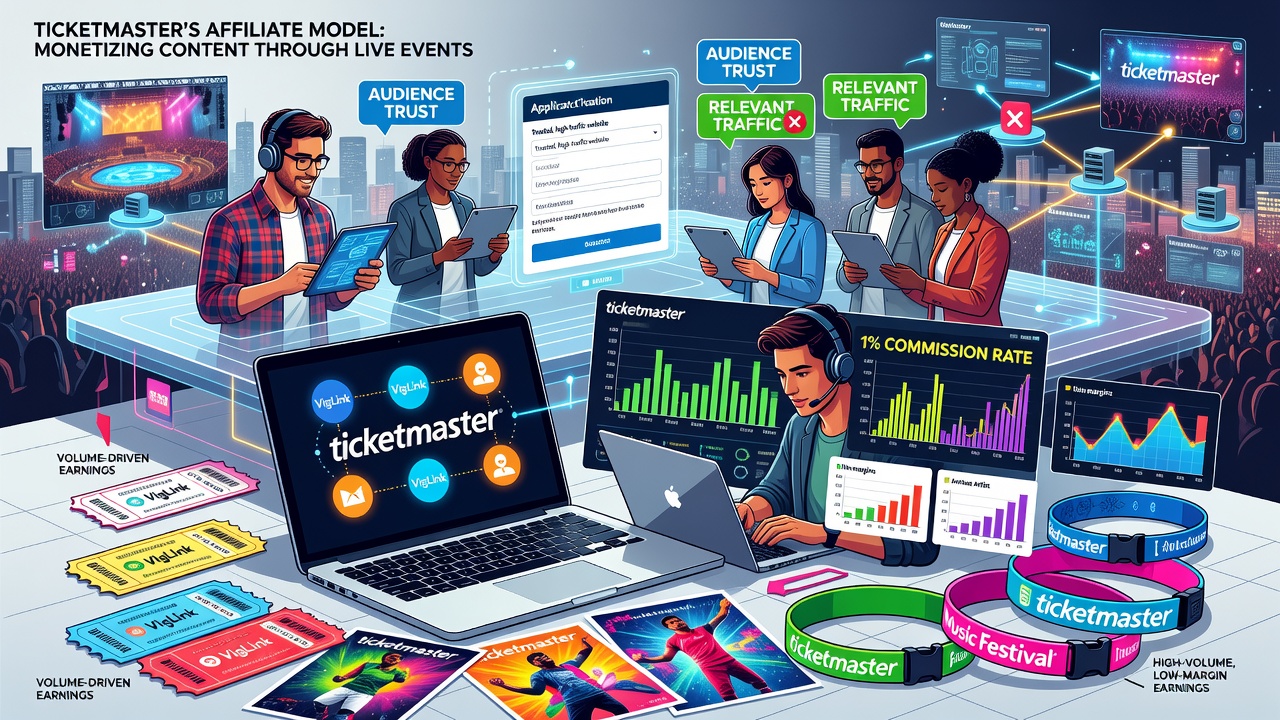
A one-percent commission rate on every ticket sale might sound modest, but it reveals something important about how large ticketing platforms approach affiliate marketing compared to higher-margin industries like betting or retail. Ticketmaster's affiliate program, accessible through the VigLink network, gives publishers and content creators a structured way to earn from audience traffic without the platform needing to offer outsized incentives. The arrangement says as much about the ticketing business model as it does about affiliate marketing itself.
Why the Commission Structure Looks the Way It Does
Live event tickets operate on thin margins relative to their face value, with service fees, venue costs, and artist or team payouts already built into the price. That leaves little room for affiliate payouts compared to, say, subscription software or financial products. A flat one-percent rate per sale reflects that reality rather than representing an unusually low offer. For affiliates, this means the business model depends heavily on volume and audience trust rather than high per-transaction payouts.
Cookie duration and tracking reliability matter as much as the commission percentage. Affiliates earn only when a tracked referral completes a purchase, and refunds or cancellations can reverse that commission entirely. Anyone building a content strategy around ticket sales needs to understand that chargebacks are a normal part of the ticketing business, given how often events get postponed, resold, or canceled.
What the Application Process Signals About Platform Control
Ticketmaster's vetting process, which typically takes a few days and requires details about an applicant's audience and content, reflects a broader trend among established consumer brands: affiliate access is granted selectively rather than automatically. This protects the brand's reputation and ensures affiliates are sending relevant, qualified traffic rather than spam clicks. For publishers, it also means affiliate income is not passive - it requires an existing content base built around sports, music, or entertainment audiences before approval becomes likely.
The Role of Tools Like Lasso in Affiliate Management
As affiliate portfolios grow beyond a single program, tracking performance across dozens of links becomes difficult without dedicated software. Tools such as Lasso Performance consolidate click data, conversion rates, and earnings across multiple affiliate relationships, giving publishers a clearer picture of which content actually drives sales. This kind of analytics layer has become standard practice in content-driven affiliate marketing, regardless of the product category, because platform-native dashboards rarely offer enough granularity to optimize a full site strategy.
- Commission rates in ticketing affiliate programs tend to be lower than in finance or software verticals, reflecting industry margins.
- Approval is not automatic - applicants need an existing, relevant audience.
- Reversed commissions from cancellations or refunds are a structural risk, not an exception.
- Third-party analytics tools help affiliates manage multiple programs beyond what native dashboards provide.
What This Means for Publishers Considering the Program
Affiliate marketing tied to live events carries its own risks and dependencies: ticket availability, event cancellations, and seasonal demand all affect earnings in ways that differ from evergreen retail products. Publishers weighing whether to join should treat the Ticketmaster program as one revenue stream among several, not a primary income source, given the modest commission rate. Building genuine content around sports or music audiences - rather than simply inserting links - remains the deciding factor in whether this kind of affiliate relationship produces meaningful results over time.