
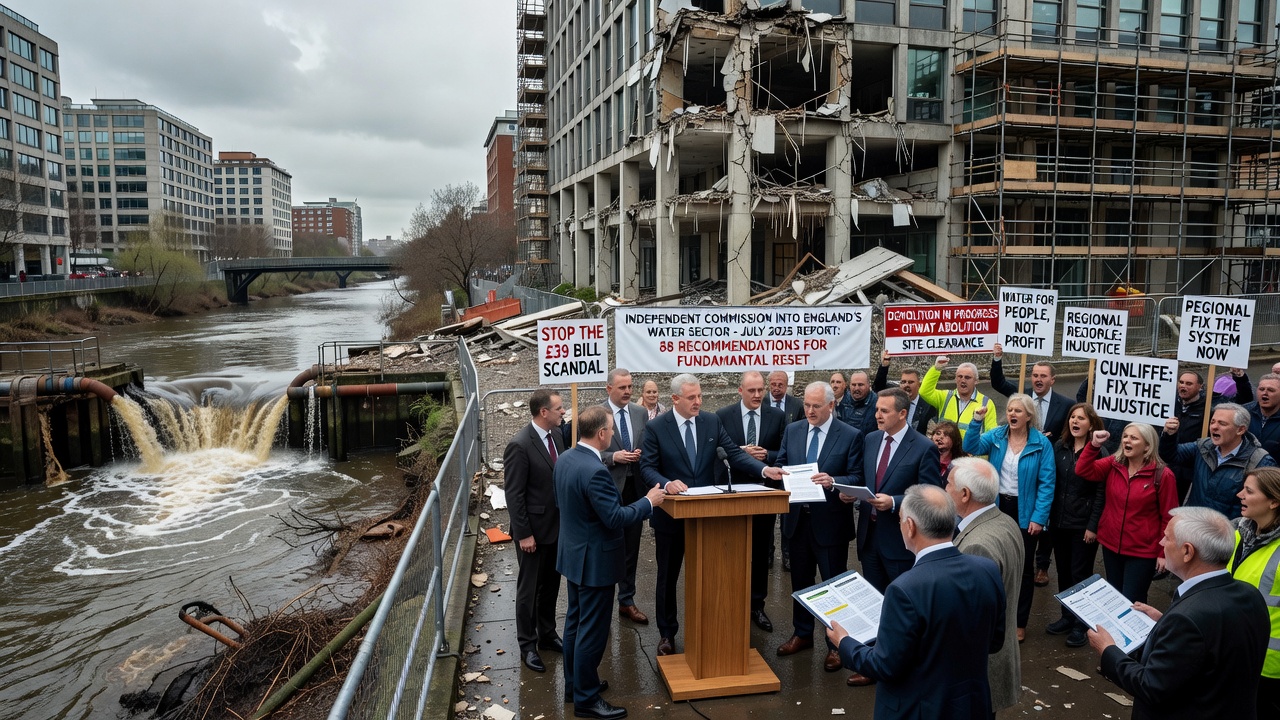
England and Wales have run their water and sewerage services as private monopolies since 1989, an arrangement that leaves most households with no choice of supplier and no market discipline to keep prices honest. The substitute for competition has always been regulation, chiefly through Ofwat, the Water Services Regulation Authority. That system is now facing its most serious overhaul since privatisation, following years of criticism over sewage discharges, executive pay, dividend payouts and company debt.
How price setting actually works
Because customers cannot switch providers, Ofwat sets wholesale price limits for each company through a five-yearly price review, alongside targets covering leakage, pollution incidents and household water use. The regulator must weigh two competing pressures: keeping bills affordable while ensuring companies remain financially stable enough to invest in infrastructure and meet environmental obligations. The most recent review, PR24, concluded in late 2024 and covers charges from April 2025 to March 2030. Ofwat projected an average annual bill increase of £19 alongside £88 billion in industry investment, describing it as the largest investment package in the sector's history. Water UK, representing the companies, argued the settlement was too restrictive and would curb investment; the Consumer Council for Water broadly welcomed the outcome while still flagging concern over the scale of bill rises.
Scrutiny intensifies after years of complaints
Public frustration with the sector has been building across the political spectrum, driven by concerns about company profits, dividend payments, mounting debt and the continued use of storm overflows to discharge sewage into waterways. In response, PR24 raised expectations on financial transparency, dividend policy and benefit-sharing with customers. Average bills, adjusted for inflation, have stayed relatively stable since 2010 at roughly £39 a month per household in England, though they vary by region depending on local infrastructure costs. Bills across the UK rose between 4.7% and 8.8% for 2024/25, a reminder that regulatory decisions translate directly into household budgets.
A sector-wide reset in motion
After the July 2024 general election, the new government moved quickly, ringfencing infrastructure investment and promising deeper reform. The Water (Special Measures) Act 2025 gave Ofwat power to block bonus payments where environmental standards are missed and increased personal accountability for water company executives. More significant was the Independent Commission into the water sector, chaired by former Bank of England governor Jon Cunliffe and launched jointly by the UK and Welsh governments in October 2024. Its July 2025 report issued 88 recommendations and called for a "fundamental reset," proposing that Ofwat be abolished altogether in favour of a single new regulator for England, with Welsh regulation devolved and merged with the environmental regulator there.
What comes next
The government confirmed it would act on the Commission's central recommendation, and in January 2026 published a white paper, A new vision for water, outlining powers for the proposed single regulator and wider policy changes. By September 2026, the Prime Minister went further, announcing plans to remove limits on government ownership stakes in water companies, giving ministers more flexibility over future intervention, including potential changes to ownership models. New powers for local leaders are also expected. Further detail is promised in a forthcoming 10 year plan for Britain, with legislation for a water reform bill still to come. For an industry built on regional monopoly and public trust, the coming period will test whether structural reform can succeed where price controls and enforcement powers alone have not.